(239) 413‑6205
Concrete Services

Pool Deck Installation and Resurfacing in Cape Coral, FL

The surface around your pool needs more than an attractive finish. It must fit the pool, move water in the intended direction, provide stable walking space, coordinate with coping and screen-enclosure conditions, and support the way the area is used. Rabeiro Construction Group installs, extends, repairs, resurfaces, and replaces pool decks for Cape Coral properties with a written, project-specific scope.

We evaluate the existing deck, visible damage, substrate, elevation, drainage, access, enclosure, equipment locations, and finish goals before recommending repair, resurfacing, partial replacement, or a new deck. Call (239) 413-6205 or request an on-site pool-deck estimate in Cape Coral.

One Focused Page for Pool Deck Construction, Repair, and Resurfacing

Pool-deck search results often mix several different services. A new deck around a planned pool is not the same as extending an existing deck. Repairing a localized crack is not the same as applying a new finish over the entire surface. Replacing failed concrete or pavers is different from resurfacing a stable base. Pool resurfacing usually refers to the finish inside the pool shell, while pool-deck resurfacing applies to the walking surface around it.

Read full pool deck scope & project inclusions

This page combines pool-deck installation, extensions, repair, resurfacing, and replacement because property owners commonly compare those options during the same site review. It does not combine complete pool construction or pool-system work. That boundary keeps the estimate, keyword ownership, responsible trades, and permit route clear.

Pool-deck projects can include:

  • new concrete pool-deck installation within an approved plan;
  • deck additions or extensions for more usable walking and seating space;
  • removal and replacement of failed or unwanted deck surfaces;
  • localized repair where the surrounding deck is suitable to retain;
  • resurfacing or an approved overlay on a compatible, stable substrate;
  • finish, texture, color, and transition planning;
  • coordination with coping, screen tracks, drainage, equipment access, and adjacent construction;
  • residential and approved commercial pool-deck scopes.

The proposal should list the exact surfaces and systems included. Pavers, travertine, specialty coatings, coping, screen-enclosure work, demolition, and pool renovation should not be assumed unless they appear in the written scope with verified responsibility.

Rabeiro pool deck project in Cape Coral

New Concrete Pool Decks and Deck Extensions

A new pool deck or extension begins with the approved footprint and intended use. The layout should account for the pool edge, home, doors, enclosure, screen tracks, yard drains, equipment, landscaping, setbacks, easements, impervious-surface limits, and safe access around the water.

Read deck layout, drainage & footings guidelines

Concrete pool-deck work may involve demolition, excavation, base preparation, forms, footers or thickened edges where required, reinforcement or bonding coordination, concrete placement, joints, texture, curing, and final site cleanup. The exact design belongs in the approved project documents and written proposal. Thickness, reinforcement, footer details, and bonding should never be selected from a generic online rule.

An extension also changes how water moves across the property. The new surface must meet existing elevations without sending water toward the home, screen track, pool, neighboring property, or an area that cannot drain. If the intended deck cannot connect cleanly to the existing elevation, the scope may require design changes, additional drainage work, a retaining condition, or another approved solution.

Before construction begins, the owner should decide how the new area will be used. Lounge chairs, outdoor dining, grills, access gates, storage, equipment service, and traffic paths can change the practical layout. Furniture and appliances should not block required access, barriers, drains, or equipment clearances.

Repair, Resurfacing, and Replacement Are Different Decisions

The right solution depends on the deck's condition, not only its appearance. A faded but stable surface may be a candidate for cleaning and an approved finish. Localized damage may allow targeted repair. Widespread settlement, unstable sections, poor drainage, repeated coating failure, or incompatible prior work can make broader replacement more appropriate.

Read repair vs resurfacing vs replacement details

Pool deck repair

Repair addresses defined damage while retaining suitable surrounding material. The scope may include an agreed crack, spalled area, broken edge, failed patch, uneven transition, or isolated section. A repair does not mean every visible crack will disappear permanently. Movement, settlement, moisture, corrosion, or a weak base can cause a defect to return if the underlying condition remains active.

Pool deck resurfacing

Resurfacing renews a broader finished surface over a substrate that can support the selected system. Preparation, removal of loose material or failed coating, crack treatment, profile, moisture, compatibility, manufacturer instructions, joints, and cure conditions affect the result. Resurfacing should not be presented as a way to conceal structural movement, broad hollow areas, unstable concrete, or drainage failure.

Pool deck replacement

Replacement removes part or all of the existing deck so the base, layout, elevation, and finish can be rebuilt within the approved scope. It may be the better choice when deterioration is extensive, the owner wants a major layout change, the existing system is incompatible with the desired finish, or repairs would leave too much questionable material in place.

Rabeiro Construction Group reviews the visible condition and explains which option the proposed price covers. If removal or preparation exposes a wider issue, we document it and discuss the options before expanding the work.

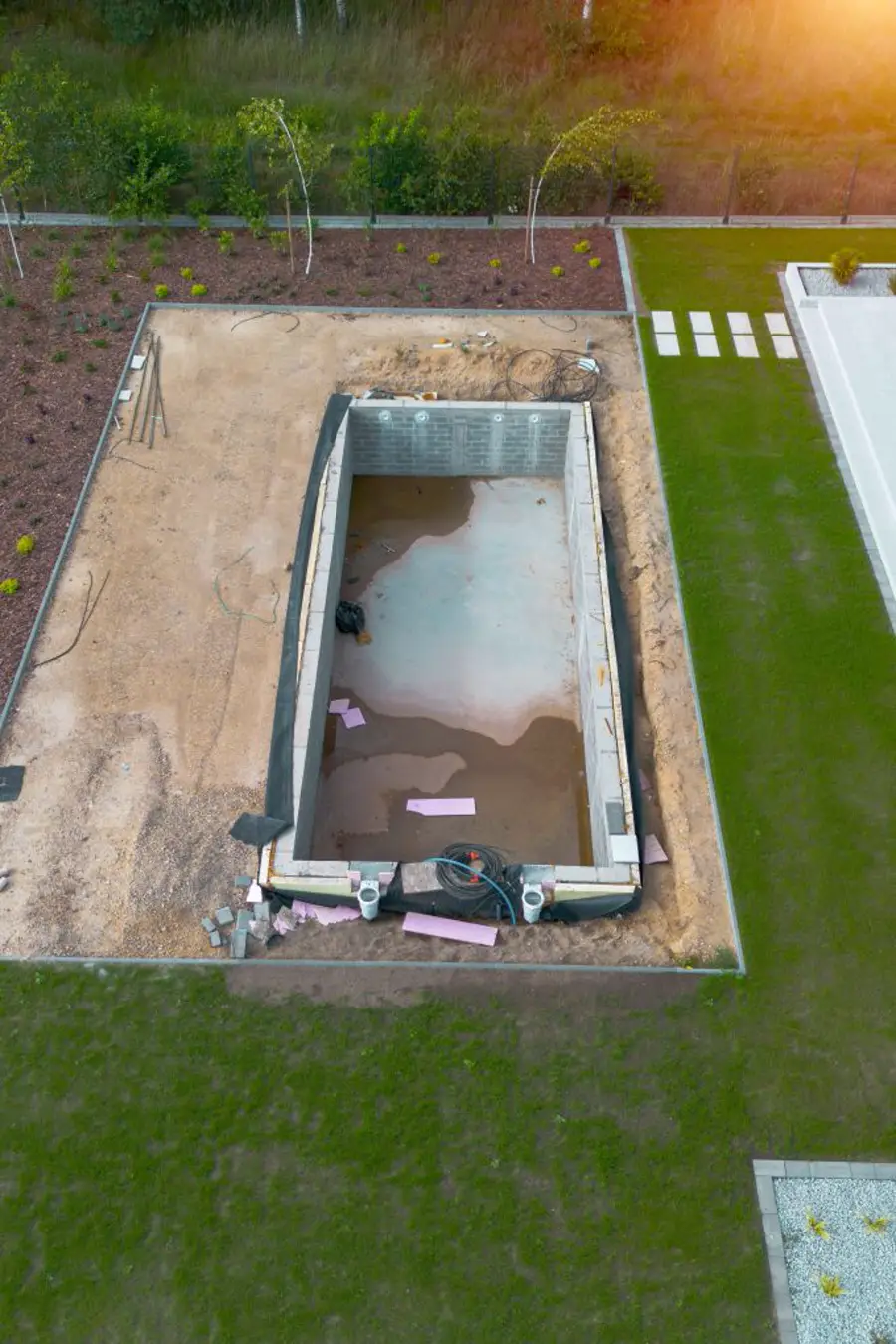
Pool deck base and form preparation before concrete placement

Cracks, Settlement, and Hollow Areas Need Careful Evaluation

Not every crack means the same thing. Narrow surface cracking, a moving joint, a settled panel, edge failure, corrosion-related damage, and a crack connected to the pool structure require different responses. A photograph can help with initial scheduling, but it cannot show the full condition of the base, reinforcement, moisture, movement, or concealed interfaces.

View all 8 visible deck warning signs

Visible warning signs can include:

  • cracks that widen, return, or cross several areas;
  • sections that sound hollow or feel unstable;
  • uneven transitions that create a trip concern;
  • spalling, scaling, delamination, or exposed material;
  • standing water or staining that returns after rain;
  • separation at coping, screen tracks, drains, or adjacent slabs;
  • coating that peels, bubbles, powders, or loses bond;
  • prior patches that move differently from the surrounding deck.

Some conditions may require a design professional, pool contractor, electrician, plumber, enclosure contractor, or another specialist. The deck estimate should not label the pool shell or a regulated system as sound when it has not been evaluated by the responsible provider.

Drainage and Elevation Planning Protect the Pool Area

Pool decks regularly get wet from rain, swimming, cleaning, irrigation, and normal use. The layout has to move that water as intended without creating new ponding, unsafe transitions, or drainage toward the building. Existing Cape Coral properties can have tight side yards, screen enclosures, canal-adjacent grades, yard drains, additions, equipment pads, and earlier surface modifications that complicate the plan.

Read slope, drainage & canal-adjacent grade rules

The site review should identify high and low points, door thresholds, screen tracks, coping, drains, equipment access, landscaping, property boundaries, and where water currently travels. The approved plan controls the finished elevations and drainage direction. A decorative finish cannot correct a layout that does not drain.

During a replacement or extension, the team should also protect drainage components and avoid blocking required routes. If the design needs a new drain, altered enclosure, retaining feature, equipment relocation, or work beyond the deck, that item should be separately designed and assigned to the responsible provider.

Wet-Area Texture, Comfort, and Appearance

A pool deck should be comfortable to use and provide a suitable walking texture when wet, but no outdoor surface eliminates the risk of slipping. Traction changes with the finish, texture, slope, standing water, algae or organic growth, sunscreen, pool chemicals, cleaning method, footwear, and maintenance.

Read color, solar heat & traction facts

Color and material also affect appearance and perceived heat. Lighter finishes may absorb less solar energy than darker choices, but the actual surface temperature depends on material, color, sun exposure, air temperature, and time of day. Product marketing terms such as "cool deck" should not be treated as a fixed temperature promise.

Owners should review physical samples when possible and ask how the selected finish feels underfoot, handles wet conditions, is cleaned, and coordinates with the home, coping, enclosure, and landscaping. Decorative patterns, borders, and multiple colors can change labor, transitions, maintenance, and cost.

Prepared concrete pool deck receiving an approved resurfacing system

Concrete, Pavers, and Finish Systems

The existing base, desired appearance, budget, access, permit route, repairability, and maintenance expectations influence the material decision. Rabeiro's confirmed core scope is concrete pool-deck construction and related repair planning. Pavers and specialty overlays or coating systems should be offered only after direct capability and the responsible installation method are verified.

Read concrete vs pavers vs coating breakdown

Concrete pool decks

Concrete can create a continuous pool surround with planned joints, texture, color, and transitions. Performance depends on site preparation, forms, reinforcement or bonding requirements, placement, finishing, curing, and drainage. Cracking cannot be promised away, so the project should include an intentional joint and curing plan based on the approved design.

Paver pool decks

Pavers can offer modular patterns and the ability to replace individual units, but the system still depends on excavation, base, edge restraint, compaction, elevation, joint material, drainage, and stable transitions. If pavers are part of the project, the estimate should identify removal, base work, paver specification, pattern, border, coping relationship, and sealing responsibility.

Resurfacing and coating systems

An overlay or coating is only as dependable as the prepared substrate and product compatibility. The proposal should identify the system, preparation method, primer if required, texture, color, joint treatment, cure restrictions, maintenance, and written warranty if one is verified. A finish should not be used to hide active movement or unstable concrete.

Coordination With Coping, the Pool Shell, and Screen Enclosures

The pool deck connects to components that may belong to different scopes. Coping forms the transition at the pool edge. Screen-enclosure posts and tracks may be anchored through or beside the deck. Electrical bonding can be affected by demolition or new work. Pool plumbing, drains, equipment lines, and water features may pass below or near the work area.

Read trade boundaries & excluded pool shell items

Before demolition or construction, the responsible providers should confirm which components remain, which are removed, and who restores them. If an enclosure extension or pool renovation is included, Cape Coral uses a different permit route from a deck-only extension. The written estimate should identify these relationships instead of leaving them to be resolved after the deck is opened.

Rabeiro's pool-deck page should never imply that deck work automatically includes pool plaster, tile, coping, plumbing, pumps, heaters, automation, lighting, water features, screen enclosures, or complete pool construction. Those items require explicit verified scope and the appropriate licensed or registered provider.

Our Pool Deck Project Process

Every pool area is different, but a disciplined sequence helps protect the property and the project:

View all 8 pool deck process steps
  1. Site review: Inspect the deck footprint, visible damage, drainage, elevations, coping, enclosure, equipment access, nearby structures, landscaping, and owner goals.
  2. Scope decision: Determine whether the requested work is installation, extension, localized repair, resurfacing, partial replacement, or complete deck replacement.
  3. Trade and permit review: Separate deck work from pool-shell, electrical, plumbing, bonding, enclosure, equipment, drainage, design, or other regulated responsibilities.
  4. Written estimate: Define demolition, preparation, base work, forms, reinforcement or bonding coordination, material, finish, joints, protection, cleanup, exclusions, and changed conditions.
  5. Selections and logistics: Confirm colors, textures, patterns, access, material staging, pool protection, enclosure status, owner responsibilities, and working hours.
  6. Preparation and construction: Protect the work area, complete approved removal and base preparation, and install the deck or repair system under suitable conditions.
  7. Finish and cure: Complete the agreed finish, protect the work during required cure time, and communicate restrictions on traffic, furniture, cleaning, or pool use.
  8. Final walkthrough: Review drainage appearance, transitions, cleanup, finish, documented exclusions, care instructions, and any final items with the owner.

The owner should receive a scope that is specific enough to compare with other bids. A low total price is difficult to evaluate if it does not explain demolition, base work, repair boundaries, finish, drainage, coping, protection, and permit responsibility.

What Changes the Cost of a Pool Deck in Cape Coral?

Pool-deck cost depends on the actual condition, system, and construction work required. An online price per square foot can exclude demolition, failed base material, difficult access, enclosure work, coping transitions, drainage, or repair conditions that control the project.

View all 12 cost factors & bid comparison rules

Cost factors include:

  • new installation, extension, repair, resurfacing, or replacement;
  • deck area, shape, perimeter, curves, and number of transitions;
  • demolition, hauling, disposal, and pool protection;
  • access for workers, concrete delivery, equipment, and material staging;
  • base condition, excavation, compaction, forms, footers, and approved reinforcement;
  • bonding, electrical, plumbing, coping, enclosure, or pool-renovation coordination;
  • drainage, elevations, drains, retaining conditions, and adjacent grade;
  • concrete, pavers, overlay, coating, texture, color, border, and pattern choices;
  • crack treatment, patching, surface removal, grinding, or other preparation;
  • permit, plan, survey, environmental, inspection, and professional-design requirements;
  • occupied-property protection, landscaping, screen panels, and cleanup;
  • weather, cure time, material availability, and changed conditions.

Request a site-specific estimate that identifies the included areas and assumptions. Compare bids by demolition, base work, material, finish, drainage, related trades, permit handling, exclusions, and warranty terms, not only by the total.

Cape Coral Pool Deck Permits

Cape Coral's permit route depends on the work around the deck. A City Notice to Industry dated July 8, 2024 discontinued the former Pool Deck Addition application type.

Read July 2024 Notice to Industry permit routes

The City currently directs applicants to:

  • use the Screen Enclosure permit type when extending the pool deck and screen enclosure;
  • use Concrete: Retaining Wall/Slab/Pilings/Concrete Wall when extending the deck without extending an enclosure;
  • use the applicable Pool permit type when extending the deck while renovating the pool.

The Permit Document Center still links an older 2023 Pool Deck Addition guideline. The newer 2024 notice changed the application routing, so the current portal and City instructions should be checked before each project.

Requirements can vary by permit route and property. Site plans, footer details, impervious-surface calculations, environmental affidavits, Notices of Commencement, surveys, enclosure documents, pool-renovation documents, bonding, and inspections may apply. Cape Coral's 2026 small-project exemption is narrow, excludes structural work, and does not apply to properties in a Special Flood Hazard Area. Work cannot begin based on an assumed exemption; the City must approve the request.

Rabeiro Construction Group should verify the current route, responsible license, registration, documents, and inspection sequence for the specific scope. The proposal should identify who manages permits and which related trades are outside the deck contract.

Why Choose Rabeiro Construction Group for a Pool Deck?

Rabeiro Construction Group is a Cape Coral construction company with concrete, slabs, driveways, stucco, drywall, painting, and broader project-coordination capabilities. A pool deck can connect several of those construction disciplines, especially when the existing surface needs demolition, concrete replacement, finish work, or coordination with adjacent repairs.

The company provides English and Spanish communication and can schedule an on-site review at (239) 413-6205. Before publication, this section should include one verified Cape Coral pool-deck project with original photographs and approved facts. Verified insurance, license, registration, material, finish, and warranty information should be added only after documentation is approved.

If your pool surround needs installation, more usable space, repair, resurfacing, or replacement, request a written estimate. We will review the deck area, visible condition, drainage, access, related components, and finish goals before defining the work.

Trust block: Licensed and insured team | English and Spanish service | Concrete & outdoor construction | Local Cape Coral office

Frequently Asked Questions

How much does a pool deck cost in Cape Coral?

Cost depends on whether the project is an installation, extension, repair, resurfacing, or replacement. Area, shape, access, demolition, base condition, forms, reinforcement or bonding coordination, drainage, material, finish, coping, enclosure involvement, permits, and related trades can all change the price. Online square-foot ranges often omit important assumptions. Rabeiro Construction Group provides project-specific pricing after an on-site review and a written scope that identifies included work, exclusions, and changed-condition handling.

Should I repair, resurface, or replace my pool deck?

Localized repair may be practical when damage is limited and the surrounding material is stable. Resurfacing can renew a compatible surface when the base can support the selected system. Replacement may be more appropriate when settlement, broad deterioration, repeated coating failure, poor drainage, incompatible materials, or a major layout change affects the deck. The decision should follow a site review. A new finish should not be used to conceal active movement, hollow areas, unstable concrete, or an unresolved water problem.

Do I need a permit to extend or replace a pool deck in Cape Coral?

Permit routing depends on the complete scope. Cape Coral directs a deck extension with an enclosure extension to the Screen Enclosure permit, a deck-only extension to the Concrete permit type, and a deck extension with pool renovation to the applicable Pool permit. Repair or resurfacing requirements can differ. The City's small-project exemption is narrow and must be approved before work begins. We verify the current route and identify permit responsibility in the estimate rather than making a blanket promise.

What is the best material for a Cape Coral pool deck?

There is no single best material for every property. Concrete, pavers, and approved resurfacing systems have different requirements for base preparation, joints, edge restraint, repair, finish, maintenance, heat, drainage, and cost. The existing substrate, desired appearance, access, enclosure, coping, use, and permit route should guide the decision. Rabeiro's confirmed core scope is concrete pool-deck work. Pavers or specialty systems should be listed only when the installer, product, preparation, and warranty responsibility are verified in writing.

Can cracks in a concrete pool deck be repaired?

Some localized cracks can be treated, but the crack pattern, movement, settlement, moisture, reinforcement, base, and surrounding condition matter. Filling the visible line cannot ensure it will never return. Cracks connected to the pool shell, broad settlement, hollow areas, corrosion, or drainage problems may need a wider evaluation. We review the visible deck and define the repair boundary. Structural pool conditions or regulated systems should be assessed by the appropriately qualified provider before a cosmetic finish is treated as complete.

How long does pool deck installation or resurfacing take?

The schedule depends on demolition, access, base work, repairs, concrete placement, finish system, cure requirements, weather, enclosure coordination, inspections, and related trades. A small compatible resurfacing scope can move faster than a full replacement or extension. Rain and surface conditions can change exterior schedules. We provide an estimated sequence after reviewing the project and update the owner when inspections, weather, or concealed conditions affect it. Traffic and furniture restrictions should follow the approved material and cure plan.

Can a pool deck be made cooler and less slippery?

Material, color, texture, drainage, and maintenance can influence surface temperature and wet-area traction, but no outdoor deck remains cool or free from slipping risk in every condition. Lighter colors may feel different from darker choices, while wet traction also depends on standing water, organic growth, sunscreen, pool chemicals, footwear, and cleaning. We review finish options and manufacturer information for the approved system. The owner should examine physical samples and understand maintenance before making the final selection.

Can you extend a pool deck inside an existing screen enclosure?

An extension may be possible, but the existing footprint, enclosure posts and tracks, property setbacks, impervious-surface limits, drainage, coping, equipment access, footer details, and bonding requirements must be reviewed. Cape Coral uses different permit routes when the enclosure is also extended. Screen removal, extension, replacement, or restoration is not automatically included in the deck price. The proposal should identify what stays, what is removed, who handles enclosure work, and how the new surface connects to existing elevations.

Do you build or repair the swimming pool too?

This page covers the hardscape and walking surface around the pool. It does not promise complete pool construction, pool-shell resurfacing, plaster, tile, plumbing, pumps, heaters, automation, lighting, water features, or electrical work. Those services require separate verification, permit responsibility, and appropriately licensed providers. If the deck project connects to pool renovation, we can define the deck portion and coordinate the sequence within the approved scope. The written estimate will state which components Rabeiro handles and which are excluded.

Request My Pool Deck Estimate

A strong pool deck starts with the right scope, drainage plan, preparation, material, and responsibility for every connected component. Rabeiro Construction Group is scheduling pool-deck installation, extension, repair, resurfacing, and replacement reviews in Cape Coral. Request an on-site visit for a clear written scope and project-specific estimate.